


Veteran suicide prevention is about more than responding to a crisis – it’s about helping Veterans find hope, connection and a reason to keep moving forward.
For United States Army Veteran Bill Longmore, that journey has taken him from some of the darkest moments of his life to a life filled with purpose, laughter and adventure…all with his Service Dog Danny by his side.
This September during Suicide Prevention Awareness Month, and as we recognize World Suicide Prevention Day on September 10, Bill’s story is a reminder that struggles with mental health can continue long after a Veteran returns home. It is also a reminder that no one has to face those struggles alone.
After serving in Iraq, Bill spent years battling the invisible wounds of war. He lost a close friend during his deployment, returned home carrying memories he could not escape and struggled to find peace in everyday life. At different points, he turned to drugs and alcohol, faced broken relationships and found himself in some of the darkest moments of his life.
But Bill’s story did not end there.
Today, he owns a construction company, travels, spends time outdoors and has rediscovered his love of movement. He has even run a 5K with Danny by his side – something he never imagined he would do again after years of injuries and recovery.
Warrior Bill’s Struggle After Iraq
Bill served in the Army for nine years as a Combat Military Police Officer, and from 2003 to 2004, he served an 18-month deployment during Operation Iraqi Freedom. As a part of his job, Bill escorted convoys, protected personnel and carried out missions throughout Iraq and Kuwait. And some memories, Bill says, never leave you.
When he returned home, he was physically back, but mentally he was still in Iraq. Everyday sights and sounds could trigger intense anxiety. He was constantly scanning his surroundings and waiting for something bad to happen.

Instead of asking for help, Bill tried to numb his pain with drugs and alcohol. Over time, that led to bad decisions, broken relationships and additional physical challenges.
“On the outside, people saw a Veteran,” Bill has shared. “But inside, I was barely surviving.”
Bill eventually found hope through his faith and went on to earn his Master of Divinity…but healing, as he learned, is not always a straight line. Even years later, the trauma continued to affect his life.
In July 2021, Bill found himself in one of the darkest periods of his life, overwhelmed by his anxiety and PTSD symptoms that made everyday activities feel impossible. Seeking help became a turning point, and during his recovery journey, Bill learned how Service Dogs could help other Veterans regain a sense of calm and control.
“I hoped that a Service Dog would help me express my feelings rather than suppress them,” Bill says. “Since welcoming Danny into my life, I’ve noticed a remarkable shift.”
How Service Dog Danny Helped Bill Find Hope Again
When someone first told Bill about K9s For Warriors, he was skeptical.
He researched the organization and the Warrior & Service Dog program, but kept looking for reasons it might be too good to be true. Instead, he found something he had been searching for: a comprehensive support system for Veterans before, during and after the program.
So, he applied – and in March 2024, Bill arrived at the K9s For Warriors Shari Duval National Headquarters in Florida. It was then that he met Service Dog Danny.
“When I saw Danny for the very first time once those gates opened, I cried,” Bill said. “I knew something special was beginning.”
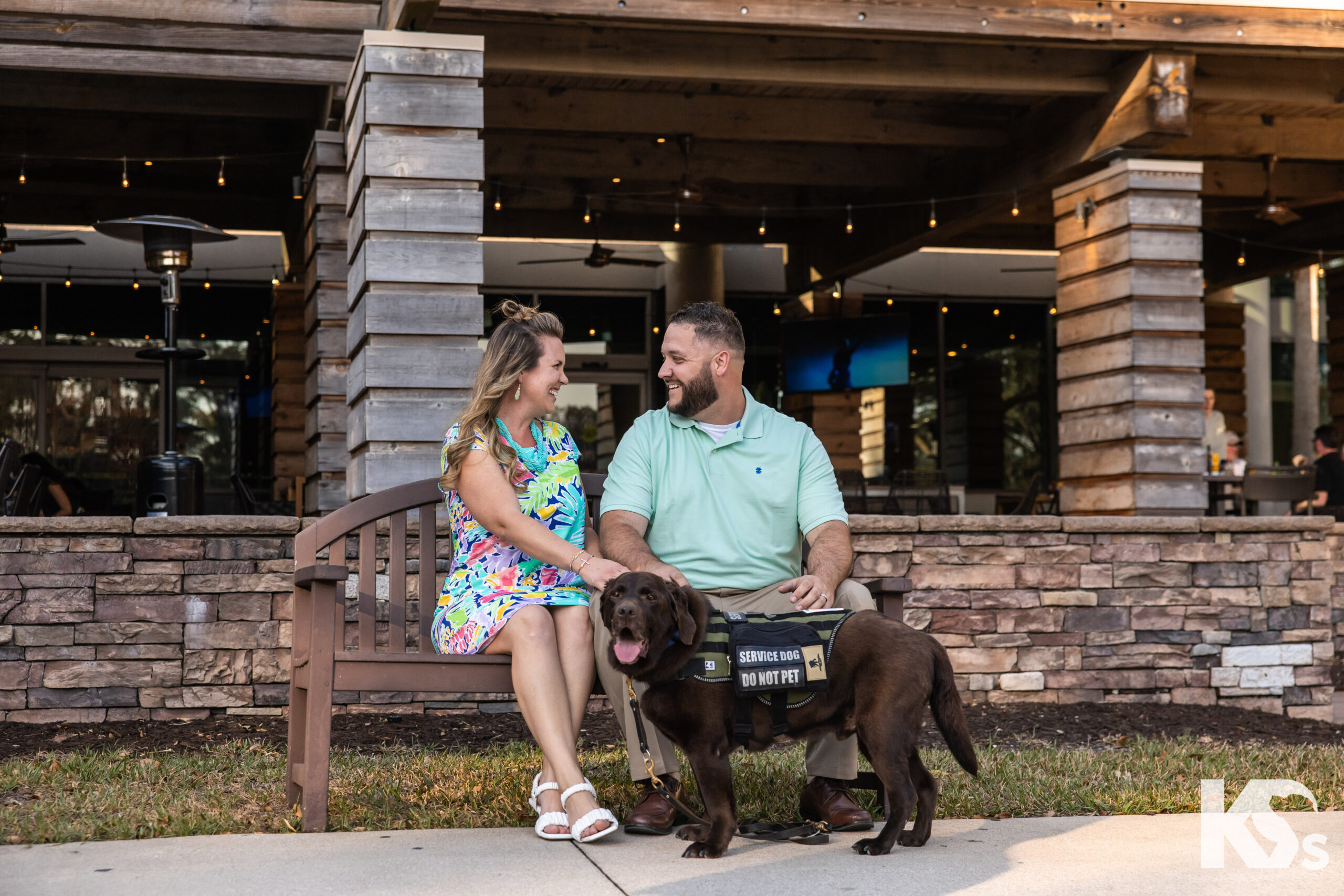
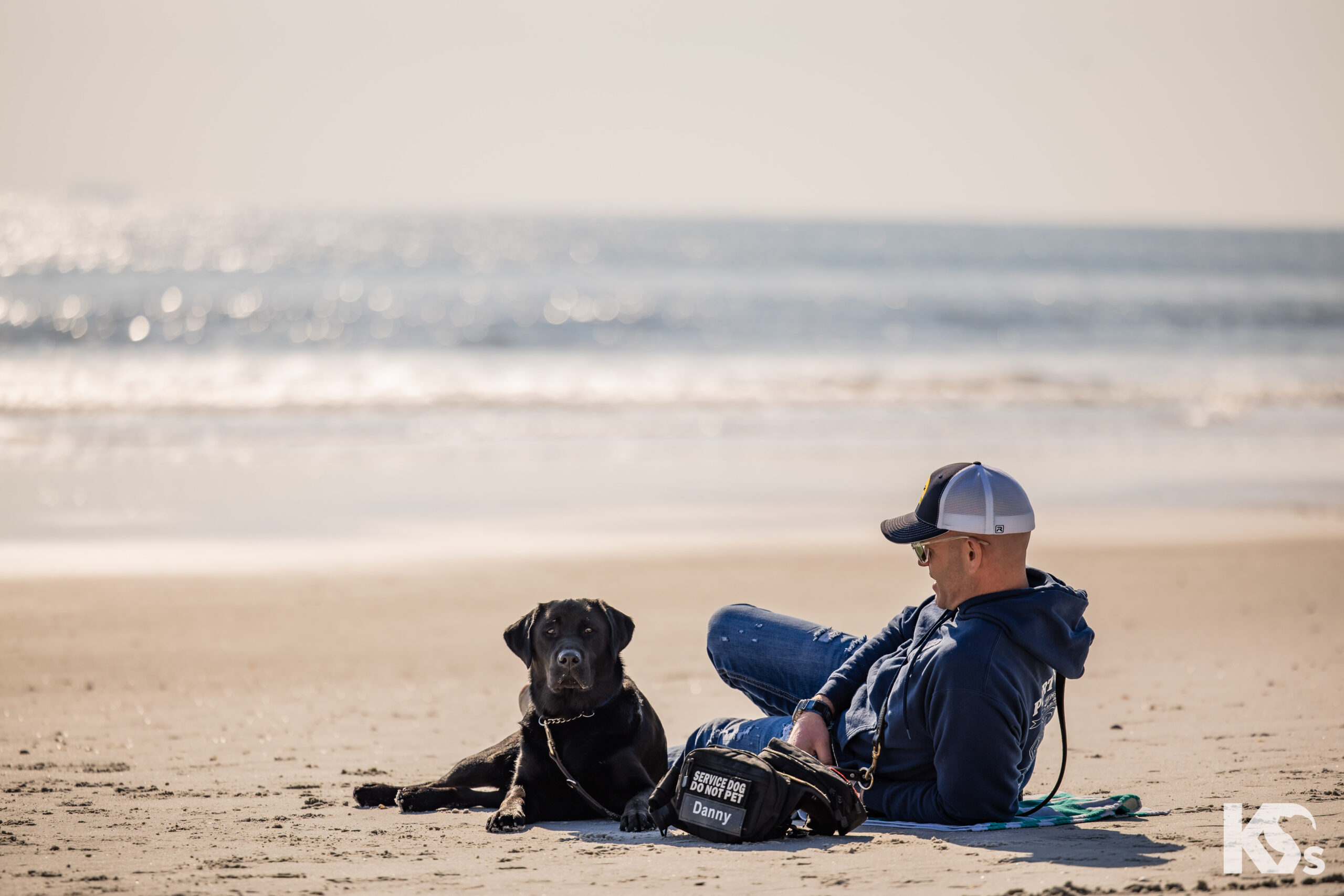
Danny, a Black Labrador Retriever with a larger-than-life personality, quickly became Bill’s constant companion and his battle buddy.
A few days into training, Bill got an early glimpse of Danny’s personality. While walking together, Danny encountered sand covering part of the sidewalk and suddenly took off in an enthusiastic burst of energy. After breaking free, Danny quickly returned when Bill called his name, sat beside him and continued their walk.

That was the beginning of a bond Bill says has changed his life.
Danny helps him enter crowded places without feeling overwhelmed and gives Bill confidence to travel. He goes to work with him, including to construction sites, where Danny has become an unofficial member of the crew. Bill jokes that Danny is the company’s HR department, although his loyalty may depend on who has the best lunch to share.
But beneath the humor is something much deeper. For Bill, Danny has brought joy back into his life.
“Everywhere we go, people smile,” Bill says. “And for someone who spent years wondering if I'd ever truly smile again, that's a gift.”

The pair now do everything together, from running errands and attending public events to hiking, camping and exploring the outdoors.
Bill has even returned to running again. Before his injuries, running was one of his greatest passions. But after his deployment, a serious car accident, multiple surgeries, arthritis and years of recovery, he had not run in more than 15 years.
With medical clearance, encouragement from friends and Danny by his side, Bill started moving again…first with walks, then virtual races and eventually a 5K.
On Veterans Day 2025, Bill and Danny completed their first 5K together.
For Bill, crossing that finish line represented much more than completing a race. It was about reclaiming confidence, joy, and realizing that life could hold experiences he once believed were behind him.
“Danny helped me find joy again,” Bill says, “one step, one mile at a time.”
Veteran Suicide Statistics: Why Prevention Matters
On average, 20 Veterans die by suicide every day. Behind that number are individuals, families, friends and communities forever changed by loss.
Stories like Bill’s are an important part of the conversation around Veteran suicide prevention because they show both the reality of the struggle and the possibility of hope. Veterans can carry experiences and wounds that are not always visible to the people around them – PTSD, anxiety, depression, trauma and isolation can affect Veterans long after their military service ends. And for many, asking for help can feel difficult.
Bill understands how easy it can be to suffer in silence. He also understands the importance of finding people, resources and support systems that can help a Veteran through difficult moments.
“Many of us carry wounds no one can see, scars no one notices, thoughts we don’t talk about and battles we fight in silence,” Bill has said. “But because of organizations like K9s For Warriors and their supporters, we don’t have to fight alone anymore.”
No single resource or approach is the answer for every Veteran. But creating opportunities for connection, encouraging Veterans to seek support and reducing the stigma around mental health are all important parts of suicide prevention.
For Veterans who are struggling, asking for help is not a sign of weakness. It can be the first step toward finding a path forward.
How Service Dogs Can Support Veterans with the Invisible Wounds of War
Bill’s experience with Danny is deeply personal, but research is also helping demonstrate the broader benefits Service Dogs can provide for Veterans living with PTSD.
In 2024, the first National Institutes of Health-funded clinical trial of its kind found significant benefits associated with pairing military Veterans with Service Dogs. Led by Dr. Maggie O’Haire of the University of Arizona College of Veterinary Medicine in cooperation with K9s For Warriors, the study examined more than 150 military Veterans over three months and compared those partnered with Service Dogs to Veterans receiving usual care alone.

The findings were significant:
- Veterans with Service Dogs had 66% lower odds of receiving a PTSD diagnosis based on an expert clinician assessment compared with Veterans in the wait-listed control group.
- The study also found that Veterans partnered with Service Dogs experienced lower levels of anxiety and depression, along with improvements across most areas of emotional and social well-being.
These findings are an important part of the growing conversation around Veteran mental health and the role Service Dogs can play alongside other forms of care and support. For Veterans living with the invisible wounds of war, the challenges of military service can continue long after they return home. The right support can help create opportunities for greater connection, confidence and engagement with everyday life.
By better understanding the measurable impact of the human-animal bond, researchers can continue exploring how trained Service Dogs may help support Veterans navigating the invisible wounds of war.
For Veterans like Bill, the research represents something he already knows firsthand: healing can take many forms, and having the right support can help make a path forward feel possible.
Veteran Suicide Prevention Resources: Call 988
During Suicide Prevention Awareness Month, and every month of the year, it is important to remember that help is available.
The 988 Suicide & Crisis Lifeline provides free, confidential support 24 hours a day, seven days a week. Veterans and their loved ones can also connect with the Veterans Crisis Line by dialing 988, then pressing 1, or by texting 838255.
If you are a Veteran or know a Veteran who is struggling, you are not alone. Reaching out for support can be difficult, but it can also be a powerful first step.
Bill’s journey is a story about hope. It is about a Veteran who survived some of his darkest moments and discovered that healing was still possible. And it’s about the message Bill wants other Veterans to hear: the struggles that come after military service do not have to define the rest of your life.
“The line you signed to serve your country does not have to become a life sentence,” Bill says. “Ask for help, do your research, apply and reach out.”
And sometimes, as Bill has learned, the companion who helps you find your way forward has four legs and a tail.

Determined to end Veteran suicide, K9s For Warriors is the nation’s leading nonprofit organization that provides trained Service Dogs to military Veterans nationwide suffering from PTSD, traumatic brain injury, and/or military sexual trauma — at no financial cost to the Veteran. Backed by groundbreaking scientific research from the University of Arizona’s OHAIRE Lab, the program demonstrates how Service Dogs can help mitigate symptoms of PTSD while simultaneously restoring confidence and independence. Founded in 2011 as a 501(c)(3) nonprofit organization, K9s For Warriors is committed to saving lives at both ends of the leash by primarily rescuing dogs and pairing them with Veterans in need. The organization is also dedicated to raising awareness about Veterans’ mental health and driving policy-level reform. To date, K9s has paired more than 1,350 Veterans across all 50 states with life-changing Service Dogs and rescued more than 2,500 dogs.